


Cinch & Charm
Simplicia Combinations
Simplicia Combinations
Couldn't load pickup availability
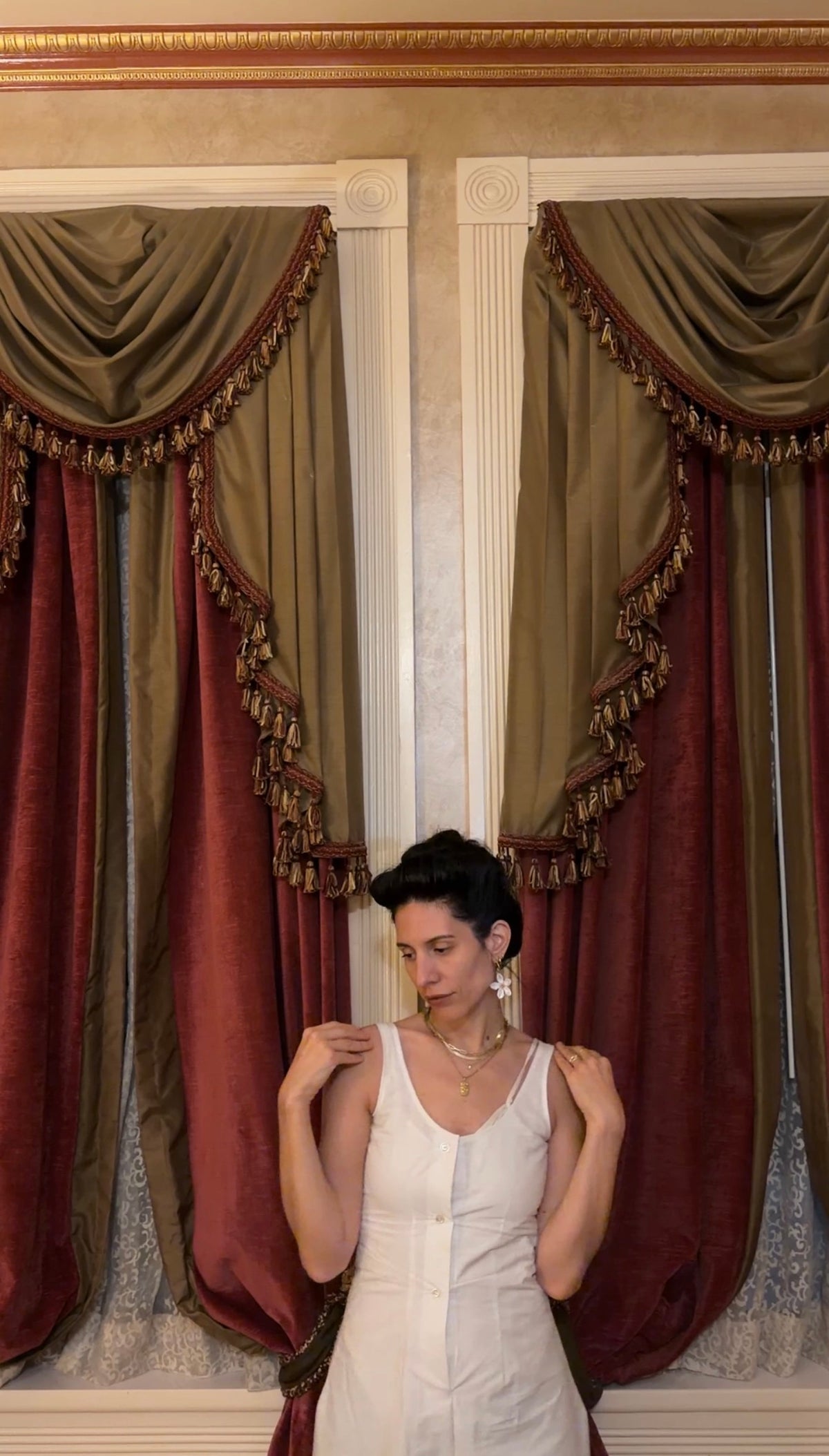
An essential undergarment for 1800s reenacting. Featuring split front drawers for easy bathroom use, and a low neckline to accommodate both everyday outfits as well as evening wear with plunging necklines. A true beginner sewing pattern that can be completed in a day.
Garment Features
Garment Features
- Split front drawers
- Front closure with buttons
- Front darts for shaping
- Low neckline for day/ evening wear
- Separate upper back piece
- Lace optional
Sewing Guide
Sewing Guide
Comes with 15+ pages of instructions, materials information, and fashion history. Fabric and supplies are not included.
- Complete materials list
- Historical Research
- Alteration Instructions
- In-depth Construction Guide
- Finishing Tips
Digital downloads include ALL available sizes. Please ask permission if you plan on making more than 1 garment from the pattern that you purchase, or for using the pattern to teach a class, or if you plan on selling the final product.
Size Guide
Size Guide
The best way to fit this garment is by using your bust, waist, or hip size. I recommend choosing the size with whatever measurement is largest.
A size chart is included in the download.
If you are not sure about your size, please just ask! You can reach us through the contact form on this site, or by direct message at any of our social media accounts.
Sewing Skill Level
Sewing Skill Level
Beginner-friendly pattern. Basic sewing skills such as how to operate a machine are required. Stitch length, thread type, needle type, and materials needed are all explained in the pattern.
Our guide is comprehensive, with in-depth instructions on every part of construction. No guessing!
Historical Accuracy
Historical Accuracy
This garment was adapted from the "National Garment Cutter's Book of Diagrams" by Goldsberry and Doran, published in 1888. The original instructions had an option for a low neckline, which we used. We also based the split front drawers on several extant garments I've seen in person around the southwest. This pattern was made to fit underneath our corsets.
"Simplicia Abeytia" is the name of a mysterious woman who appears on my family tree from the 1880s. She may (or may not) be the mysterious female figure nicknamed "Lia" who helped raise my grandfather and his siblings in the early 1900s. I picked "Simplicia" because this is a very "simple" pattern to make, and she was alive when the design was popular.
Materials
Materials
Complete materials list is in the packet included with the pattern. They are also listed at the bottom of this page.
-1.5 yards or 2 yards of 60" fabric, depending on the size. A single set of sheets could make this entire garment.
-5 buttons of your choice
-Optional lace.
Share


Combinations History
The combination undergarment, merging chemise and drawers into a single piece, first appeared in the late 1860s or early 1870s, and by the 1890s had largely replaced the older practice of wearing a long chemise over a separate pair of drawers. Its main appeal was reducing bulk: drawers had a gathered drawstring waist, and stacking that under a loose chemise, petticoats, corset, and dress created unnecessary layers of fabric right at the waistline, which the one piece combination eliminated. Elaborate versions in silk and muslin with full, wide legs trimmed in lace were especially popular in the 1890s, though acceptance wasn't universal, since an 1897 issue of Lady's Realm noted that "the fashion for wearing combinations is followed by very few people... who never really took to this form of underwear."
By the Edwardian era, combinations had become genuinely fashionable rather than merely practical, shifting away from their earlier Victorian reputation as "ugly utility garments," and were typically worn as one of at least three core underlayers, alongside the corset and a petticoat, to achieve the era's desired silhouette.
Go through even more primary sources in our instruction packet!

Were these worn in the southwest?
Yes. Here are some advertisements for inspiration for your finished garment. I will also include some Victorian fabric definitions so you have inspiration for fabric to buy. As is the case today, different brands used different fabrics. Feel inspired to have fun with this project.
Victorian cotton fabric:
- Longcloth: A fine, soft, plain-weave cotton, usually bleached white, that was a staple for underclothing and linens.
- Nainsook: A lighter, softer, slightly sheerer plain-weave cotton than longcloth, favored for delicate lingerie and infants' wear.
- Cambric: A fine, closely woven cotton (or linen) with a crisp, smooth finish, used for handkerchiefs, underclothing, and shirt linings.
- Muslin: A broad term for plain-weave cotton ranging from coarse to fine, with longcloth being one of its finer grades.
- Batiste: A very fine, lightweight, semi-sheer plain-weave cotton with a soft, lawn-like hand, used for lingerie, blouses, and trimmings. Beware that modern batiste can be very, very lightweight and sheer.

The Rocky Mountain News (Daily), Volume 49, Number 162, June 10, 1908
Materials you will need:
Fabrics
It is recommended to use a plainweave 100% cotton that is preshrunk and NOT see-through.
Protip: Buy a cotton sateen sheet! They are affordable, and one sheet set is large enough for even the largest sizes.
Recommended Tools
Ironing: Steam Iron, Ironing Board, Tailor’s Ham
Sewing: Sewing pins, Plastic Sewing Clips (optional), Sewing Machine, Clear ruler
Sharp scissors or rotary cutter with fresh blade
Heat erasable pens or tailor’s chalk
Fabric snips
Notions
Buttons of your choice (5 total, or more as desired)
Optional:
Lace trim for neckline (1 yard)
Lace trim for legs and arms (2-3 yards)